
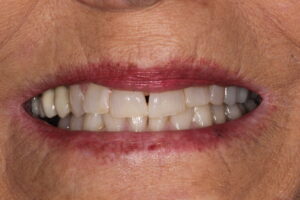
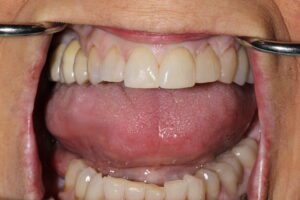
Have you ever wondered what causes that little triangle of space at the gum line between your teeth. In the dental world we call this a “Black Triangle” because the shadow in the back of your mouth makes it look black. These spaces can make teeth appear aged, trap food, collect plaque, and negatively affect smile aesthetics. There are many different causes and below you can see a little about each one.
Common Causes of Black Triangles
First, that triangle of gum tissue is called a papilla. I always tell patients that the papilla is like a half-filled water balloon, where if you take pressure off of it, it will tend to lay flatter, resulting in a black triangle of space. But if you are able to keep pressure on it, it will continue to fill the space (with some limitations).
Common causes include:
- Periodontal disease and bone loss
- Natural gum recession with aging
- Orthodontic treatment revealing underlying spacing
- Triangular tooth shape
- Aggressive brushing or trauma
- Poorly contoured restorations
Why Treatment Matters
In addition to cosmetic concerns, black triangles may contribute to:
- Food impaction
- Increased plaque retention
- More difficult oral hygiene
- Speech concerns
- Reduced patient confidence
 |  |
A Modern Minimally Invasive Solution: Composite Bonding
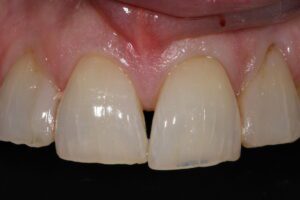
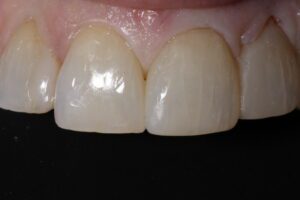
One of the most effective conservative treatments for black triangles is direct composite bonding.
Using carefully placed tooth-colored composite resin, dentists can reshape the sides of teeth to close dark spaces, improve contact areas, and create a more natural, youthful smile—all while preserving the majority of healthy tooth structure.
Composite Bonding vs. Veneers
While porcelain veneers are another option for closing black triangles, they often require permanent removal of healthy enamel and involve a more aggressive, costly approach.
Composite bonding offers several advantages over veneers:
- Minimal or no tooth reduction
- Preservation of natural enamel
- Lower overall cost
- Usually completed in one visit
- Easier repair or modification if needed
- Highly aesthetic results when properly designed
Veneers may still be appropriate in cases involving significant discoloration, major shape correction, or broader cosmetic rehabilitation, but for many patients with isolated black triangles, composite bonding provides a more conservative first-line solution.
Benefits of Composite Bonding
- Minimally invasive
- Natural-looking aesthetic improvement
- Improved cleansability and gum health
- More affordable than veneers or crowns
- Often completed in a single appointment
- Repairable and adjustable over time
Ideal Candidates
Composite is often best for patients with:
- Mild to moderate black triangles
- Stable periodontal health
- Post-orthodontic spacing
- Cosmetic concerns without severe structural damage
 |  |
Final Thoughts
Black triangles can significantly impact both appearance and oral health, but they can often be corrected conservatively.
Composite bonding provides a predictable, aesthetic, and tooth-preserving solution that can restore a fuller, healthier-looking smile without more aggressive restorative procedures.
For patients seeking an effective alternative to crowns or veneers, this technique represents one of modern dentistry’s most advanced solutions for black triangle closure.